
Green Building & Sustainability in Commercial Projects
An overview of the sustainability impact of commercial projects and green building certification
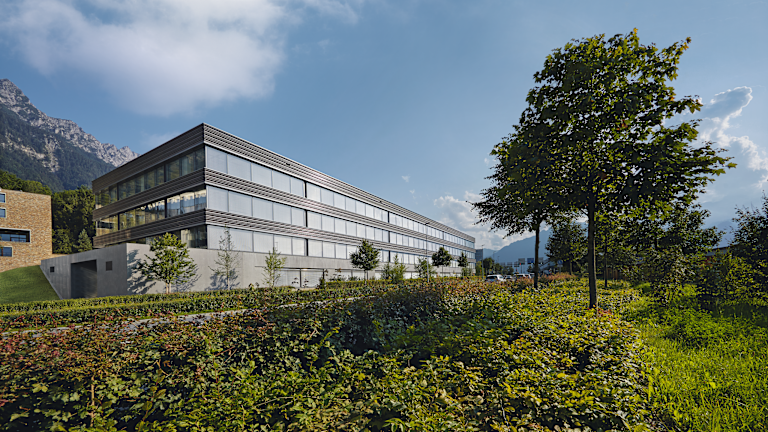
Green Building & Sustainability in Commercial Projects
Introduction
In commercial projects such as hotels, offices, and multi-purpose buildings, Green Building is gaining momentum globally. Governments, owners, architects, engineers, and contractors commit to do their small piece in making a more sustainable future in the built environment.
Buildings designed with sustainability features may* reduce operational costs, increase user satisfaction, and – in some markets – correlate with rental or value premiums. Furthermore, sustainable and green building certified buildings may attract the attention of international companies, who prioritise the well-being of their employees and are willing to invest in high standard office spaces aligned with company policies focused on sustainable development goals (SDGs)3.
This article equips stakeholders with the understanding of relevant green-building certification schemes so that they can make informed design choices, including product selection, to lower the carbon footprint of the building in all stages of the building’s lifecycle (construction, material transport, operations, end of life/ recyclability). Additionally, it reviews of available Hilti certifications and documentation, spanning Environmental Product Declarations (EPD), Volatile Organic Compounds (VOC), andCradle to Cradle (C2C) for Firestop, Anchors, Façade, and Installation and how these documents can support credit achievement. Click here for Hilti’s Green Building Materials Certification guide.
Good for the Planet and Good for People
Avoiding hazardous materials and using low-VOC and material-health–verified interior products can improve indoor environmental quality and, when combined with improved ventilation strategies as well as other attributes such as good acoustic performance and light, may contribute to measurable cognitive-performance improvements[i].
Green Building Schemes and Commercial Buildings
Major frameworks like LEED, BREEAM and WELL address CO2 emissions, energy use, water consumption, indoor environmental quality and material health.
Biophilic design: Incorporating nature into buildings, is defined in WELL v2[ii] and several BREEAM schemes (such as BREEAM-NL[iii]) while LEED promotes daylight and views as nature linked strategies.
ESG Benchmarking: GRESB[iv]6, the global ESG benchmark for real estate and infrastructure, has partnered with IWBI/WELL since late 2023 to strengthen social-sustainability reporting. The GRESB Health & Well-being Module[v] was launched in 2016 and partially integrated into the Real Estate Assessment in 2019.
Operational Emissions: Commercial buildings, especially high-rise buildings, consume significant operational energy. While renewable energy and efficient HVAC systems are critical to mitigating operational impact, optimizing the building envelope is equally vital. High-performance façade designs, thermal bridging mitigation, and optimized structural attachments ensure structural integrity while minimizing energy loss and maximizing natural light utilization.
Sustainability Documentation to Support Product Selection
In the initial design phase of a project, specifiers have the opportunity to optimize the design for embodied carbon and operational carbon. Embodied carbon encompasses the “hidden” emissions during the procurement and construction phase, including the extraction, manufacturing, and transportation of materials.
An EPD is a standardized, verified document that communicates transparent and comparable data about the life-cycle environmental impact of a product. It is not a "green" rating, but rather a transparent data sheet covering metrics like global warming potential (carbon footprint), ozone depletion, and water use. EPDs are governed by international standards (ISO 14025 / EN 15804) and are critical for earning green building certifications like LEED.
C2C takes EPDs a step further by also evaluating the circularity of the product. Minimizing construction waste through reuse and recycling can reduce embodied carbon where technically feasible[vi]. C2C is a globally recognized, multi-attribute product standard that goes beyond measuring impacts to actively incentivizing regenerative design. To be certified, products are rigorously evaluated across five essential categories:
Material Health (ensuring chemicals are safe for humans and nature)
Product Circularity (ensuring components can be reused or recycled)
Clean Air & Climate Protection
Water & Soil Stewardship
Social Fairness
To learn more about Documentation for Sustainable Building design, please go to this Hilti Engineering Center article.
Product Selection for Green Building
Many firestop, anchor, façade, and installation system products come with a broad range of certification and manufacturer’s statements to help achieve points in Green Building Schemes. Not only do most products now have third party verified EPD’s according to ISO 14025 / EN 15804 and VOC emission testing (CDPH v1.2, EN 16516, ISO 16000 series). Many products also come up with critically reviewed Life Cycle Assessments (LCA’s), providing transparency on the embodied carbon of the product and providing information on the manufacturing and end of life of the product. Products are also tested according to different global VOC emissions test standards, and wet-applied chemicals are tested for VOC content. Third party verified Cradle to Cradle Material Health Certificates (C2C-MHC) provide confirmation that the raw materials have been assessed down to 0,01% / 100 ppm according to the requirements of C2C such as the C2C restricted substance list.
EPD and VOC certificates support credit achievement in LEED and BREEAM. In addition, C2C-MHC contributes towards the material health categories of WELL and LEED. Assessment for Living Building Challenge Red Listed chemicals to 100ppm is done for a large proportion of firestop products and a Red List Free Statement is available upon request.
To find out more and to download the available certification for our products, please visit the respective product pages on Hilti online and check the tab “sustainability”.
Note: Credit awards are exclusively determined by the respective certification body. Product documentation may support credit submission but does not guarantee credit achievement.
References
[i] COGfx Study What if indoor air quality could improve decision making?: Harvard T.H. Chan School of Public Healthhealthybuildings.hsph.harvard.edu/research/indoor-air-quality/cogfx/
The impact of working on a green certified building on cognitive function and healthPiers MacNaughton, Usha Satish, Jose Guillermo Cedeno Laurent, Skye Flanigan, Jose Vallarino, Brent Coull, John D. Spengler, Joseph G. Allen
[ii] Biophilie: WELL v2 Feature Library;
[iii] BREEAM‑NL HEA 10 Biophilic Design
https://standard.wellcertified.com/v2/mind/biophilia-i-qualitative
https://richtlijn.breeam.nl/credit/biophilic-design-1791
[iv] GRESB ESG Benchmark Partnershaft IWBI:2023 www.gresb.com
[v] GRESB Health and Wellbeing Module (2016: integration 2019)
[vi] Science Direct Energy saving and Green building Certification : Case study of commercial buildings in Warsaw, Poland Lukasz Mazur, Mario Resler, Eugeniusz Koda, Dariusz Walasek, Magdalena Daria Vaverková
*No general guarantees applies; subject to review of each individual project